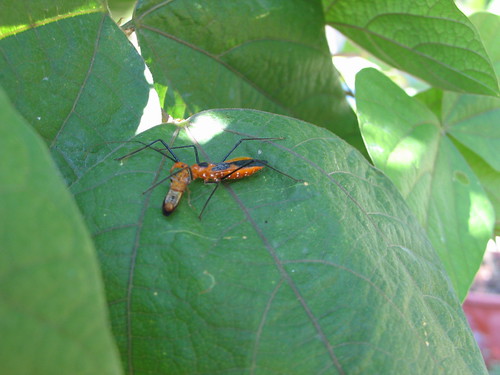
Big assassin bug munching on a nasty leaf hopper in some bean plants.
Gardeners who value natural balance know that beneficial insects can be our greatest allies. Being an organic gardener means that not only are you feeding your family chemical free food, you're feeding the soil healthy nutrients, and you're providing a habitat for bugs of all kinds, including the nasty ones. By keeping pesticides out of your garden, no bees will be damaged when pollinating your flowers. By allowing some aphids to remain on the leaves, you're feeding generations of ladybugs and keeping them interested in staying so that they're there as your best defense against the next inevitable swarm of aphids and other pests. Anoles and geckos will fill your gardens if they have plenty of bugs to snack on, and they too will help rid your garden of the numbers of pests that can damage your crops. But along with the good bugs come the bad, and it's your responsibility as a gardener and good Earth citizen to know the difference between the two and allow the beneficials to thrive and protect your spread from the nasties.

Nasty hornworm caterpillars can defoliate a tomato plant quite rapidly
One misunderstood beneficial insect is the wasp. I am personally allergic to wasp stings, so forgive me if my photos are a bit out of focus due to a bit of distance between me and my friendly neighborhood nesting wasp. We all know that bees are the big pollinators, and have been in trouble lately due to the use of pesticides and the introduction of alien bees. But along with bees come their flying cousins, the wasps. They can sting repeatedly, and are excellent predators not just of your ankles, but of some very nasty garden pests.
Paper wasps prey on insects such as caterpillars, flies and beetle larvae which they feed to larvae. They actively forage during the day and all colony members rest on the nest at night. - Texas A&M
I have seen it in my very own garden: a big ole' hornworm, all deflated and dead and eaten from, hanging by its weird little filament off a tomato branch it was in the process of defoliating. This particular wasp nesting in a little pipe coming out of my house is a paper wasp. The adults feed off nectar, pollinating as they go, but they feed their larval young bits and pieces of common garden pests, thus ridding my tomato and pepper plants from unwanted foes. I caught these pictures a day after i'd have liked - on the day prior i saw inside the paper nests little wriggling larva babies! It was pretty cool, to say the least. On this day mama wasp has covered the tips of the nest to keep her babies protected. Once she's incubated and hatched these baby wasps, they will leave the nest and never return - paper wasps only use their nests once.
So, please think twice before zapping the wasps with some nasty canned wasp killing spray. If you stay away from them, they'll most likely keep their stingers to themselves, and give you a big helping hand in the garden.


