Showing posts with label beneficial insect. Show all posts

Thursday, April 21, 2011

Southern Pest Spotlight: Chinch Bugs

Have you noticed large areas of yellowing and dying grass in your lawn? Do the areas seem to be spreading and getting larger? Your lawn may be suffering from brown patch, but chinch bugs may also be the culprit. Chinch bugs are most damaging to St. Augustine grass, but can be found in other types of lawns. Our early, record breaking, rain lacking heat wave is the perfect breeding ground for all kinds of pests, especially the chinch bugs. Here's a little about chinch bugs:
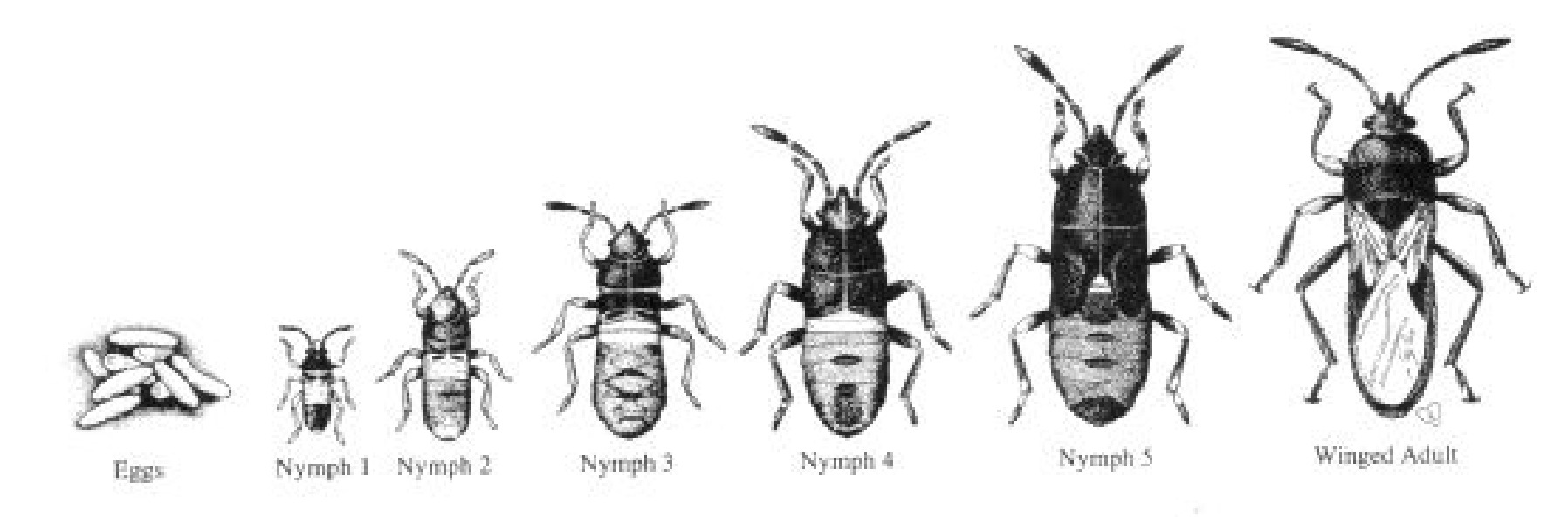
Chinch bugs overwinter as adults in various protected areas, particularly among weeds and grasses near fields. Adults emerge in the spring and deposit eggs singly behind the leaf sheath or in the soil at the base of the small grain crop plant. In a few days, the eggs hatch and the nymphs begin feeding on all parts of the host plant from the roots to the uppermost leaves. The nymphs undergo six developmental stages, the last being the adult stage. Two to three generations occur per year, the later generations migrating to corn and sorghum when small grain crops become dry.

The chinch bug pierces the plant with its moth parts and sucks out the plant sap. This feeding prevents normal growth and results in dwarfing, lodging, and yield reduction. Severe infestations during early development may cause plants to wilt and die prematurely. Most injury is caused by the six nymphal instars.

- Oklahoma State University
According to The Texas Ag Extension Office the symptoms of chinch bug damage differ from brown patch symptoms which usually occur in a circular or semi-circular pattern. Chinch bug feeding causes irregular-shaped areas of dead and dying grass. Chinch bug damage also can be difficult to distinguish from that caused by drought. Detection of significant numbers of the insects themselves is the best proof that chinch bugs are the cause of the damage. The Natural Gardener is happy to take plugs of soil dug from your yard to ID with their fancy microscope. They recommend digging a square foot or so of soil from the border of one of the patches: include soil from the dying and the healthy areas of your yard. But once you ID the nasty little buggers - what is there to do about it?

Controlling chinch bugs starts with prevention. Aerate your lawn regularly and don't allow a thick bed of thatch to build up, providing perfect habitat for the eggs and adult bugs alike. Mowing properly helps to reduce thatch as well - by 'mowing high' or only cutting off 40% at most of the grass blades, you'll be placing less green matter back on the lawn to turn into thick thatch. Mulching mowers are also a fantastic option. Don't over fertilize your lawn. Over-application of fertilizer also contributes to thatch formation and makes lawns more attractive as a food source for chinch bugs. Chinch bugs thrive in heat stressed lawns, so remember to water your lawn appropriately and consider top dressing with compost in the early spring to help with water management and overall health.

If you can't prevent chinch bugs, you'll have to control them. There are natural and organic methods including promoting diverse and organic habitat for beneficial insects including big eye bugs, assassin bugs and ants. Consider insecticides as a last resort, as they will devastate the populations of these beneficial insects.

For a very thorough explanation of chemical control of chinch bugs, please visit the Texas Agricultural Extension's page on the subject. Pesticides should never be used without taking safety precautions and being absolutely sure that the pest your treating is the pest that is damaging your lawn. Knowledge is power!


Have you seen chinch bug damage in you rlawn? What do you plan to do about it?

This post is also found at Yard Farm Austin.

Tuesday, July 20, 2010

Misunderstood Beneficial Insects

Awesome discovery!
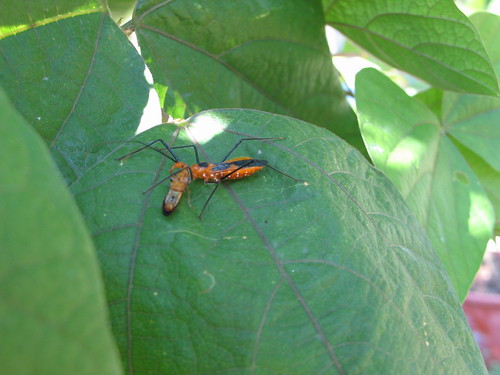
Big assassin bug munching on a nasty leaf hopper in some bean plants.
 
Gardeners who value natural balance know that beneficial insects can be our greatest allies. Being an organic gardener means that not only are you feeding your family chemical free food, you're feeding the soil healthy nutrients, and you're providing a habitat for bugs of all kinds, including the nasty ones. By keeping pesticides out of your garden, no bees will be damaged when pollinating your flowers. By allowing some aphids to remain on the leaves, you're feeding generations of ladybugs and keeping them interested in staying so that they're there as your best defense against the next inevitable swarm of aphids and other pests. Anoles and geckos will fill your gardens if they have plenty of bugs to snack on, and they too will help rid your garden of the numbers of pests that can damage your crops. But along with the good bugs come the bad, and it's your responsibility as a gardener and good Earth citizen to know the difference between the two and allow the beneficials to thrive and protect your spread from the nasties.

acrobatics
Nasty hornworm caterpillars can defoliate a tomato plant quite rapidly

One misunderstood beneficial insect is the wasp. I am personally allergic to wasp stings, so forgive me if my photos are a bit out of focus due to a bit of distance between me and my friendly neighborhood nesting wasp. We all know that bees are the big pollinators, and have been in trouble lately due to the use of pesticides and the introduction of alien bees. But along with bees come their flying cousins, the wasps. They can sting repeatedly, and are excellent predators not just of your ankles, but of some very nasty garden pests.

Paper wasps prey on insects such as caterpillars, flies and beetle larvae which they feed to larvae. They actively forage during the day and all colony members rest on the nest at night. - Texas A&M
I have seen it in my very own garden: a big ole' hornworm, all deflated and dead and eaten from, hanging by its weird little filament off a tomato branch it was in the process of defoliating. This particular wasp nesting in a little pipe coming out of my house is a paper wasp. The adults feed off nectar, pollinating as they go, but they feed their larval young bits and pieces of common garden pests, thus ridding my tomato and pepper plants from unwanted foes. I caught these pictures a day after i'd have liked - on the day prior i saw inside the paper nests little wriggling larva babies! It was pretty cool, to say the least. On this day mama wasp has covered the tips of the nest to keep her babies protected. Once she's incubated and hatched these baby wasps, they will leave the nest and never return - paper wasps only use their nests once.

So, please think twice before zapping the wasps with some nasty canned wasp killing spray. If you stay away from them, they'll most likely keep their stingers to themselves, and give you a big helping hand in the garden.