Showing posts with label garden pests. Show all posts

Monday, May 16, 2011

Thrips: Tiny Pest, Big Impact

Walking through the lawn and feel a sharp bite on your arm only to look down and see nothing? Look a little closer: that tiny beige freckle is moving! Thrips are itty, bitty winged insects that will feed on most any plant, and are happy to take a taste of you from time to time. They are easily controlled with a good balance of predatory insects like lacewings, but can kill vegetation if allowed to populate out of control. According to the Texas Organic Vegetable Gardening book (a must own for all Texas veggie gardeners) thrips
attack buds and tight-petaled flowers such as roses. They are barely visable to the naked eye but will rasp the plant tissue and drain teh sap. Heavy infestations can kill plants... Controls include seaweed, lacewings, citrus and neem.
How do you determine thrip damage? The sap suckers will leave leaves with a mottled appearance and can deform leaves and flowers. You may see runner lines on the underside of the leaves and sotty debris from their droppings. My early tomatoes had trouble setting their flowers last year: thrips were to blame. Thrips can also cause problems by spreading disease from plant to plant. If you notice a spread of wilt throughout your garden, you may have thrips to blame. This image shows thrip damage on cucumber plants:


I think i may have just determined what's plaguing this year's cucumber crop in my own garden. Here's my cucumber:


Looks pretty similar, ay? I had some weeeiiiird disease looking deformation in my cucumbers the year before last: twisted up flowers and mangled leaves. I'm thinking thrips may have been to blame then as well. I did spot some small leafhoppers on the leaves, so this damage may be due to them or a combination of the two pests. Thrips are more likely to descend effectively on your crops when they're suffering from dryness. Another reason that automated irrigation, preferable at the soil level is so important to the health of your garden. Thrips are also attracted to pink and blue, making them common pests for flowers like petunias. You can control or at least ID your problem as thrips by placing bright blue or pink cards sprayed with sticky trap at intervals in your garden. Another useful control for thrips is allowing dry, weedy areas to remain outside of your garden. The thrips like the dry, unhealthy grassy weeds (another reason you'll feel the stingy thrip bites while walking through droughty lawns) and will leave your vegetables alone.

Our massive drought is definitely taking a toll on my (unautomated) garden. Plants are stunted due to lack of consistent water, and pests are staking their claims. The natural predators usually found in force in my garden (toads, anoles and predatory insects) have been hiding from the heat themselves  and aren't doing their jobs as well as i normally expect them to! To be honest, i've just about had it with this season. I'm so happy to see some of our clients' gorgeous gardens on a weekly basis. Despite the drought, their gardens (with automated watering) are really popping and utilizing this heat and sun to set early harvests. For the rest of us struggling through the heat - it's time to start seeds for Fall. Let's hope that season does us a little more kindly.

Some very excellent photos of various species of thrips and their damage can be found on this site. Perusing this page makes me realize I have a lot more thrip damage on a lot more plants than I ever thought. Onions, citrus, cucurbits and beans all show signs of thrip damage in my garden. Dang!

Articles with useful information on thrips:
This post can also be found at Yard Farm Austin.

    Monday, November 15, 2010

    Garden Watch: Caterpillars On The Loose

    The broccoli is growing crowns, the kale is leafing up fantastically, the chard is out of this world: but what's this? Little holes in those big, beautiful leaves?

    One little caterpillar can do a whole lot of damage
    Caterpillar Attack!
    It is important to spend some time in your garden to observe the health of your plants and check for potential marauders. My garden is most often plagued with snails: they can at times be seen in vast herds on the walls of houses in my neighborhood and take advantage of rains to sneak attack the veggies trying to enjoy the drink as well. Nasty snails.  Along with snails are their covert friends: caterpillars. Small, green and camouflaged; large, fuzzy and obvious: all caterpillars want is to defoliate your lovely veggies and herbs as quickly as they can digest. Granted, some will turn to beautiful butterflies and should be left alone or even provided with specific habitat (ie dill plants for the swallowtail butterflies). This time of year though, most of the caterpillars in the garden should be hunted and squished - or fed to the chickens.
    What to look out for:
    • Holes in leaves - may be small and round or jagged and 'chewed' looking
    • Broken stems or leaf stalks
    • Holes in tomatoes and other fruits
    • Strange grenade looking dung

    Leaf damage like this can be caused by snails and caterpillars

    The hornworms of Summer
    If you see any of these signs, go in for a closer look: turn over the leaves of your plants and you may find an unwelcome visitor. Caterpillars will most often hide on the underside of the leaves and down in the center of a plant or flower. Tomato hornworms are remarkably well camouflaged and can sometimes only be spotted by the tell tale signs of leafless stalks amongst an otherwise healthy tomato plant, and the conspicuous grenade shaped dung they leave behind.
    What to do with the critters once you've caught them? I generally squish the smaller, green caterpillars  or cutworms found on my brassicas and in the soil. The larger worms get tossed to the chickens to their delight - or thrown into the street for the mockingbirds to dispatch. It's not the most gentile job in the garden, but your plants will thank you for being their hero. They can't run away from threatening critters, and they'd much rather have your hands on them than nasty chemicals. However, If you have a bad infestation of caterpillars or a very large garden area you can supplement handpicking with BT (Bacillus thuringiensis) a natural soil bacteria that can fight off hoards of nasty caterpillars too vast to be handpicked. The great thing about BT is that it only targets the caterpillars and spares the beneficial insects.

    Fuzzy caterpillar found chewing on some beet greens

    Flipping broccoli leaves over can unveil some unwanted tag alongs
    Take some time to look over your plants today, it might just save their life - or at least maximize the bounty for you instead of for creepy crawlies. Also, please mind the lower temperatures during this lovely season. Temps below 40 may be too chilly for certain plants, especially tropicals and citrus. When our first freeze does show up in the forecast - pick what tomatoes and peppers are still on the vine and wrap any other sensitive plants with freeze cloth or old sheets.

    This post and others I've written can be seen at Yard Farm Austin.

    Monday, October 4, 2010

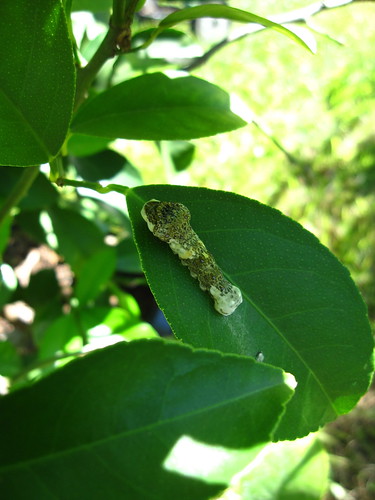
    Garden Critter Spotlight: Giant Swallowtail Butterfly - Orange Dog Caterpillar

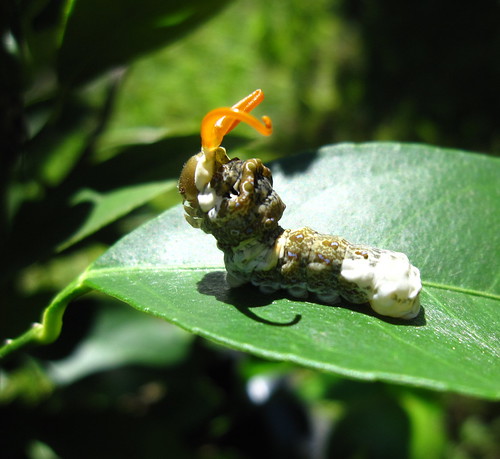
    I love my lemon tree to pieces. Which means this lovely caterpillar is about the only one i allowed to live, picking off the rest of his brethren. The Orange Dog Caterpillar mimics bird poo to avoid being eaten by predators (as is proven by the hens' total disinterest in eating the picked off bugs we offered to them), and is a pretty good trick on human eyes, too! The caterpillars start out quite small and get larger, able to chow down pretty heavily on citrus leaves. On larger trees, they wouldn't be much of a problem and worth leaving alone to enjoy the beautiful Giant Swallotail Butterflies. But my little tree is just now leafing back out in the cooler days and i'm not about to let those new, tasty leaves be gobbled up by caterpillars, no matter how pretty their mature phase is. The more leaves on a lemon, the more fruits, and with the Grackle birds pecking at all my ripening lemons i need all the foliage i can get!

    That being said, i allowed this guy to stick around since he was already pretty large. I picked off several other from my little kaffir lime trees as they're SUPER small and one caterpillar can defoliate them in a jiffy - and did.

    Is that bird poo on my lemon tree? Nope, it's a caterpillar, and check out those horns when provoked!

    What's Growin' End of September 2010
    What's Growin' End of September 2010
    What's Growin' End of September 2010

    Part of gardening is managing 'pests' and all the critters in your landscape. Do you let them run amuck and manage themselves? Do you step in and remove certain, less ideal bugs? I try and leave most things alone. The anoles will eat the baby leaf footed bugs, but not quickly enough so i spray them down with soapy/spicy/garlicy water when i can find them.  The toads, geckos, skinks and other crawlies do a pretty good job of managing most the other bugs and the birds get the majority of the hornworms and other caterpillars. If i had more than one lemon tree, i'd let all these funny looking caterpillars have their way with the foliage and mature into beautiful butterflies.
    But i've only got my one lovely, and i'm not afraid to defend her!

    Tuesday, June 29, 2010

    I Am NOT Pleased

    A. My face and arms look like i've been attacked by fire ants or bees. What was the culprit you ask? Beans. A whole mess of bean plants. My pole beans were out of control, unproductive, and in generally irritating. So i pulled them all out with the help of my pup by my side, and suffered nasty rash as a repercussion. Beans, corn, cucumbers: all are sticky with evil fuzz on their leaves that i'm quite allergic to. Who says plants don't fight back?

    B. My very favorite tomato plant in the garden is being attacked. Not sure of the culprit of this thieving, but it's either squirrels or more likely birds. I was walking in the backyard the other day only to have a huge, gorgeous green tomato plopped at my feet with half of itself missing. No you didn't! Then this morning i found another at the base of a tree, another in a crook of a branch in the same tree, and several dropped to the ground around the plant.  No wonder i've harvested so few blushing tomatoes off this plant - nasties are beating me to it!

    !

    Unacceptable indeed! Sadly, i tossed my bird netting last year after some sad run ins with lizards being caught in the mesh. All i have is some old window screen, some christmas ribbon, and a gumption to shoot me some marauding bird! I may have to make a trip to the hardware store to buy more supplies, as i do NOT want to lose all my crop of favoritest tomatoes to nasty thieving local birds.


    What are your strategies for protecting your tomatoes from "the Enemy"?

    Thursday, June 24, 2010

    Gardening Tip: Dealing with Leaf Footed Bugs

    I hate them. HATE. I hate how they destroy my beautiful tomatoes. I hate how they look. I hate how they smell. Who do i hate?

    Image Copyright © 2006 sashajade

      They are nasty animals that like to suck the life out of our lovely plants. Their nasty proboscis nose/tongue/mouth part stabs into lovely fruits like lemons, tomatoes, peppers, legumes and sucks out the good stuff. What i'm left with is red tomatoes covered in dimply green/dry spots- sometimes completely dried out on the inside. It is both lame and not tasty.  This is another reason that i pick my tomatoes right at blush - get them inside in the safety of the house! Once you've learned to identify the culprit - do all you can to destroy them, or else they will try and destroy you! 
    (Note: i don't spray for bugs. Occasionally i use Neem for squash borers and DE for slugs etc. These guys make me WANT to resort to spray - but it really doesn't work that great anyway. And who wants to have to WASH their tomatoes before you eat them? not me.)

    This is what they look like as babies:

    Copyright © 2007 Doug Smith
     Copyright © 2006 The Longs
    Copyright © 2007 absolutneef 
    They are most easily identified as being clusters of tiny red nasties. Assassin bugs look a bit similar and are good guys - so don't kill them. Their babies are more solitary - so it's the cluster of red bug that's the good giveaway on who to kill. The long egg chain is also a good giveaway. Assassin bug eggs are more like clusters:

    Copyright © 2010 Rich Kelly

    There are several kinds of assassin bugs - lots of kinds actually. Here's one of the guys from my garden:


    Learn to identify the bugs in your garden: it's super fun, and it's important to know who are the good guys and who are the bad. All bugs, of course, have their place in the ecosystem - but one of the other reasons i hate the leaf footers - nobody likes to eat them! They're just too nasty! They're like the Klingons or Borg of the bug world (woops, just outed myself as a Trekky) Chickens won't eat them. The turtle won't eat them. Wild birds don't even seem to go for 'em. So, you ask - how do i combat these nasties without spray?

    A. Vacuum cleaner
    B. Cup of soapy water

    These are my tried and true methods. A: I used to have an old vacuum cleaner, the canister type with a long hose. We'd plug it into the extension cord, my hubby would hold it and i would direct the hose. Yes, my neighbors think i'm crazy. A shop vac would work great for this.  B: Cup of water works great, but you have to catch the bugs. Luckily, they usually drop down when disturbed so if you can get the cup of soapy (just enough soap to break the tension of the water surface) water underneath the bug you can tap it from the top and it will fall in and drown. Mwa hahahaha. Problem with this method is that they can also just fly away. Vastly irritating. That and you end up with gross smelling cups of dead bugs all over the garden, well i do at least - perhaps i should learn the joys of TIDYING up after myself?
    Hope these tips help fellow frustrated gardeners. What pest is the bane of your existence?

    Images courtesy of Bugguide.