Showing posts with label homemade yogurt. Show all posts

Wednesday, August 24, 2011

Elk Stroganoff


OMG. I have to use that keyboard shortcut for this meal. Cuz, OMG it was amazing. The house smelled amazing. The end results tasted amazing. Even the dog ate amazingly. (some grain free kibble, plus raw elk and squash!) This stroganoff surprisingly smelled a lot like my mama's stroganoff, which was made using completely different ingredients (mostly store bought) but the health benefits of this meal far exceeded hers. Sorry for the dis, ma.

My sister is up and moving to Wisconsin soon, and she gifted me with an assortment of meats and other items from her freezer, including some elk meat hunted by her boyfriend (who shares the same name as my husband: confusing!) Included in the elk meat was some ground burger style meat. Beans are in season, so i was looking for something i could prepare with meat and a side of beans and just stumbled into this meal in my brain: stroganoff! I found a recipe online to use as a reference, and added more veggies and different herbs, and of course used my homemade yogurt instead of sour cream or store bought yogurt. The results were fabulous and i'm so proud of us for leaving leftovers!

Elk Stroganoff with a side of Beans
  • 1 lb ground elk meat (or venison, or bison, or even turkey)
  • 2 patty pan squash (or zucchini, or green peppers, or whatever is in season - you get the idea)
  • 1 red onion
  • 1 or more large garlic clove
  • Good pinch of dried hot peppers
  • 2 cans sliced mushrooms, or 1 cup fresh/sliced mushrooms
  • Splash olive oil
  • 2 T flour
  • 1 Cup broth or 1/2 cup broth/ 1/2 cup red or white wine. I used turkey broth as that's what i had
  • 1 Cup yogurt
  • Dried herbs of your choice: i used basil/thyme/oregano/smoked paprika
  • 2 T dijon mustard
  • Pan full of fresh green beans, the skinnier the more delicious
  • Butter or olive oil
Set the stage: one large pan with lid. One medium pot with water. One large pot with water and a steam rack. Prep your beans by pinching off the stemmy bits and arranging on the steaming tray.

Toss oil, onion, garlic, mushrooms and meat in the pan at medium/high heat until meat is browned. There can still be plenty of red showing. Toss in flour and squash and stir continuously for about 2 minutes. Add the herbs and broth, stir and reduce heat to medium. Cover and allow to simmer for about 10 minutes.  Meanwhile get the water for your pasta (i used whole grain egg noodles) going and turn on the heat under your green beans. The fresh beans will take over 5 minutes to adequately soften. Once the beans are ready, the pasta is done and the meat has simmered turn off the heat and add yogurt and mustard. Stir well and delight in the aromas!

Serve the stroganoff over egg noodles (or rice, or raw zucchini 'noodles') with a side of beans that have been drained and tossed with a scant amount of butter or oil. I used roasted pepper infused olive oil and a splash of truffle oil, plus salt. Yum!

Stroganoff isn't the prettiest dish, and i'd publish the aroma if i could. You'll just have to get invited over for dinner to enjoy that element. ;)

You can find this post and more great recipes and tips at the Simple Lives Thursday blog hop!

Thursday, February 17, 2011

Probiotic Coleslaw


Including probiotic foods such as fermented pickles and yogurt is essential to healthy digestion and great for all around good health. We have yogurt for breakfast every morning with chia seeds, banana, and soon bee pollen. The protein really keeps us going strong all day without the drowsy effects that eating wheat has. Try having toast before you hit the gym and then have yogurt the next day instead: i'll bet you'll be jumping higher on the yogurt day! I make our yogurt every two weeks. We get raw milk and I always save enough yogurt from the previous batch to make the next week's new batch of yogurt. It's the most delicious yogurt either my husband or i have ever tasted, and the cost is ridiculously frugal: a quart of White Mountain yogurt will set you back over $5. I turn one gallon of milk into about 5 quarts of yogurt for about $7. It's very easy, doesn't require any special skills or tools, and has increased our health by leaps and bounds. Immune systems, check! Healther skin and hair, check! Increased energy levels, double check!

Yogurt for breakfast is great. Yogurt in baking is really great, but i really don't need to be eating more baked goods. So, how can one use yogurt for dinner recipes? Yogurt is great added to a curry or cream sauce. Yogurt can be used as a sauce or dip, and can be incorporated into just about any recipe that would normally use cream, milk, or sour cream. Get creative! You get the most health benefits by not cooking out the good bacterias, so always add the yogurt at the last minute and don't let it boil.

A recent favorite in our kitchen has been a yogurt sauce/dip. We used it on our nachos on game day, and it's really, really delicious on fried fish or in fish tacos in place of ranch dressing. Use whatever herb you have growing seasonally, we've been using cilantro:
  • Plain Yogurt (whole milk yogurt will make a thicker dip, skim is saucier)
  • Pinch herbs (cilantro, dill, basil, mint, you name it)
  • 3 garlic cloves
  • Pinch cumin
  • Salt to taste

Blend this up until the garlic cloves are completely chopped. The fresh garlic, and herbs along with the probiotic rich yogurt is a real immunity booster, and super delicious. This sauce is so versatile and can even be added to some shredded cabbage to make the most delicious coleslaw with no fat needed.


Do you make your own yogurt? What are your favorite yogurt based recipes?
This post can also be found at the blog hop: Simple Lives Thursday

Wednesday, December 1, 2010

Wholesome Wednesdays: Cranberries

Wow, i can't believe it's already wednesday morning. No excuses this week, here's much ado about cranberries!
Firstly, cranberries are tart and delicious, and are great in cranberry/ jalapeno muffins!

Secondly, "my mama always said" eat your cranberries to prevent urinary tract infections! It was long thought that that tart, acidic bite of the cranberry was what prevented UTIs, but it's recently been proven that their proanthocyanidins (PACs) are what prevent the dreaded UTI:
The special structure of these PACs (involving A-type linkages between their components) acts as a barrier to bacteria that might otherwise latch on to the urinary tract lining. In many studies, the UTI-preventing benefits of cranberries are somewhat modest and limited to women who have recurrent UTIs.  -WHFoods
Gotta love bacteria blocking food stuffs! (Apologies for the overabundance of exclamation points this morning, it's just that kind of a day) This bacteria fighting may also be helpful in fighting stomach ulcers caused by nasty tum-bacteria build up. It also turns out that those cranberries that are water harvested (generally for convenience and easier harvesting) may have even greater health benefits than their non-water harvested friends. Those berries that get to float on the water for a few weeks really soak up the sun, increasing the content of anthocyanin  (the phytonutrients that give the berries their popping red color). And as is usually the case - if you want to get the full bang for the health-buck of cranberries, eat them whole instead of taking capsules or drinking juice. As is often the case it is the synergy of all the interior components of the berries that make them so healthful, not just one or two little elements alone. Eat those cranberries and get antioxidant benefits, anti-inflammatory benefits, and anti-cancer benefits, oh my!


A note on cancer from World's Healthiest Foods:
Over the past 5 years, scientists have identified an increasing number of mechanisms that help explain the anti-cancer properties of cranberries. These mechanisms are now known to include: blocked expression of MMPs (matrix metalloproteinases); inhibition of ODC (ornithine decarboxylase enzymes); stimulation of QRs (quinone reductase enzymes); inhibition of CYP2C9s (Phase I detoxification enzymes); and triggering of apoptosis (programmed cell death) in tumor cells. The cancer-preventive benefits of cranberries are now known to extend to cancers of the breast, colon, lung, and prostate.

Tons of health benefits are hiding in this tart little berries along with some great, immediate nutritional goodness. Cranberries are a great source of Vitamin E (Alpha Tocopherol) and Vitamin K, and a very good source of Dietary Fiber, Vitamin C and Manganese. They include a decent amount of sugar, like most fruits but all that Vitamin C makes a little sweet worth it. Mix in some cranberries to your diet this holiday season: i'm famous for my cranberry sauce every Thanksgiving, but i also like to mix them into my homemade applesauce, great with yogurt for a probiotic, cancer fighting breakfast.
Here's to your health!


What's your favorite cranberry recipe?

Wednesday, November 17, 2010

Wholesome Wednesdays: Yogurt (yoghurt)

I'm pretty easy going when it comes to breakfast. I like both sweet and savory with favorites being egg sandwiches, peanut butter toast, or warm porridge. Or bacon, or shredded wheat, or crumpets....... you get the idea. Lately though, i've had increased energy, decreased waistline, and overall better attitude, and what have i been eating for breakfast? YOGURT!


I'm sure many of you (who live in America at least) have seen plenty of commercials and advertising touting the benefits of probiotics in our diet. They're good for the immune system, digestion, and are found in lactofermented goodies- especially yogurt. Lactobacillus acidophilus (those good bacterias found in yogurt) can help children and adults alike beat allergies - another reason i'm loving my new breakfast routine: Miranda's gots some baaad allergies. Here are some imformative bullet points from HealthCastle.com:

Health Benefits of Probiotics

  • Studies have found that probiotics may improve nutrient bioavailability, for B vitamins, calcium, iron, zinc, copper, magnesium and phosphorus, among others.
  • Pediatric studies have found that certain strains (such as Lactobacillus GG, found in Culturelle capsules) may aid in significantly decreasing the rate of acute diarrhea and rotavirus shedding. Parents also reported a 25% decrease in diaper rash among babies drinking formula containing probiotics.
  • Probiotics and active bacteria culture may improve lactose intolerance. The bacterial strain commonly used in yogurt can produce lactase enzymes. Therefore, people with lactose intolerance and children suffering from intestinal infection can usually tolerate yogurt with an active culture.
  • Some studies have shown that by regulating intestinal transit time, probiotics improve constipation among the elderly.
  • Other studies have shown that probiotics, especially acidophilus, promote the growth of healthy bacteria in the colon and reduce the conversion of bile into carcinogens (cancer-causing substances).
  • Some studies have found that probiotics may enhance immunity by regulating lymphocytes and antibodies.


Not all yogurts are alike, however. I eat homemade yogurt made from raw milk. Unpasteurized milk by itself has more healthful bacterias in it than the store bought stuff, and by souring or fermenting it to make yogurt you boost those good bacterias even more. Fresh, living probiotics are aflurry in my yogurt, but if you purchase yours from the store be sure and choose a brand that clearly states 'living cultures' because not all include them. Are you familiar with creamy, overly sweet and fruity custard like yogurt? That just doesn't cut the mustard and can contain harmful sugar that counteracts your desire to eat healthfully. Calcium is nice. Probiotics are nice. Tons of sugar for breakfast is not nice - you might as well eat some fruit loops. When i buy yogurt here in Austin (i need starter for my homemade yogurt, and if i have my timing wrong and have used up all of my own yogurt, i need to purchase my starter) i purchase White Mountain Bulgarian style yogurt. It's made locally and is rich with living bacterias.

Smoothies, labneh (yogurt cheese), curry, tzatziki sauce, cucumber salad, or in a bowl with some fruit and chia seeds: yogurt is where it's at. And it is super easy to make, so make yogurt part of your immunity boosting, cancer fighting, regularity building diet today!

What's your favorite use of yogurt?

Monday, September 13, 2010

Yay! Yogurt Success!

I had to write this quick post before we left. In a mad panic i made yogurt this morning before Pocket's puppy school - i was done in the nick of time. I used Soule Mama's technique and finally succeeded!


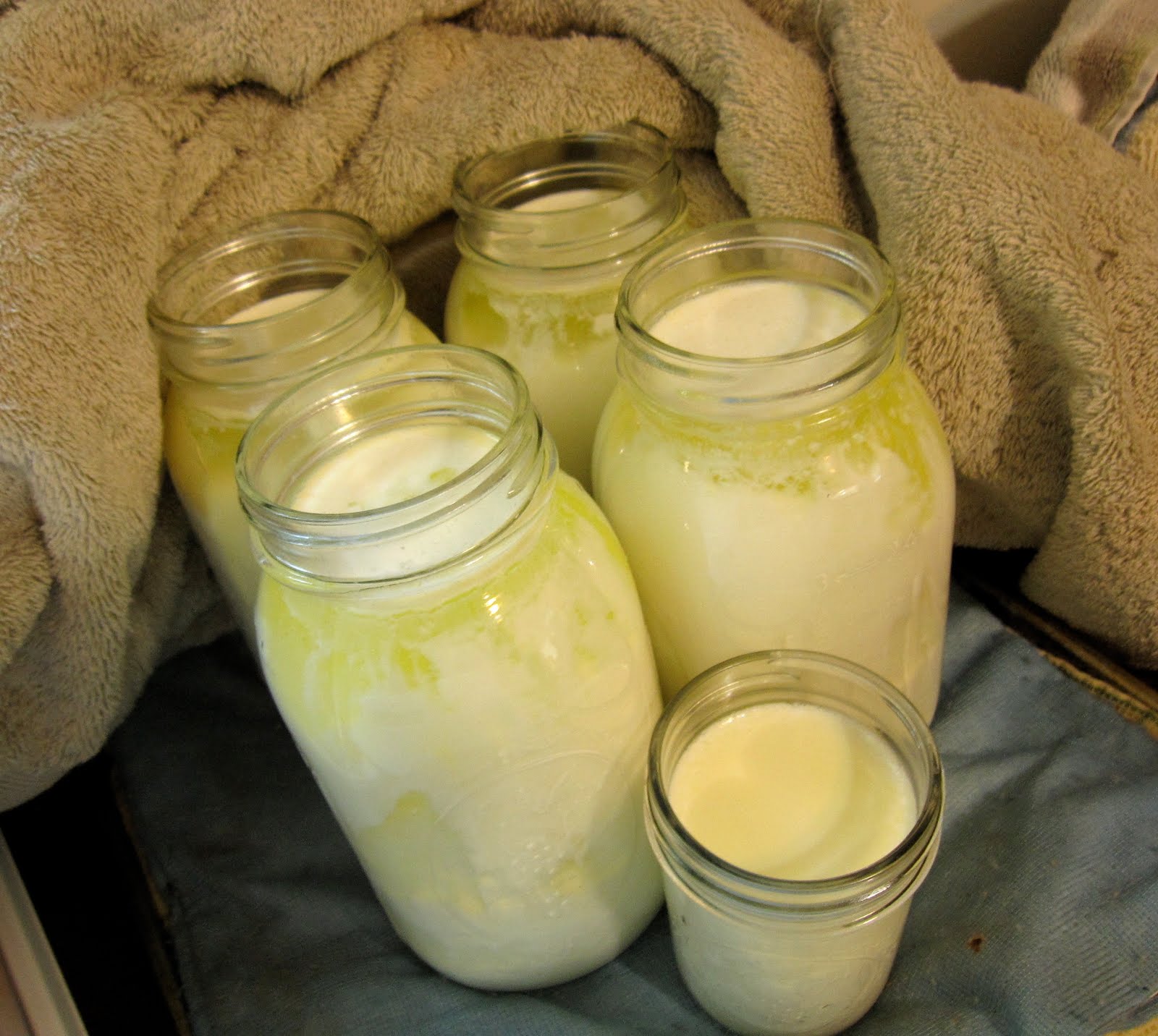
I used 1 gallon, minus about half the cream removed for butter of raw cow's milk. I heated the milk to a steamy 180 degrees then cooled to 110ish whereupon i added 2 cups of White Mountain yogurt (made in austin) mixed with a little powdered goat milk. Stir stir, pour pour into 4 quart jars and one bonus little jar. I incubated them unlidded on a heating pad set to medium and wrapped in cozie towels for about 7 hours.

The husband and i immediately sampled from the little bonus container (that we'll be taking with us on our trip) and oohed and ahed immensely. So good! Really good warm, too. Pretty much the most delicious yogurt i've ever had. Success!!! The quarts have a lot of separated whey, but that's no matter. I can use it for other things.


Now to save enough starter yogurt to go towards my next batch. Can't wait to have my own goats to milk so that i can have a constant supply of fresh yogurt. $6.50 a gallon plus $2 co-op fee gets a little spendy.

Saturday, June 19, 2010

Yogurt Results!

One thing I look forward to in my life is goats: the breeding, honing, loving, and milking of Kinder goats. One of the things about raising and milking goats that i look forward to is making my own cheese and yogurt on a regular basis.


Before i get into the success or failure of my yogurt attempt, i just want to mention the starter: You can make yogurt with a few tablespoons of already made yogurt, or with freeze dried bacteria starter stuff available from various cheesemaking supply stores like this.  So i made yogurt - i should use some of it to make a new batch within a week. Alas, i only buy milk every 2 weeks so i'll have to start again. Could i use the yogurt as starter if it has been frozen? I don't know - can i? Since we don't eat a ton of yogurt, i will be turning about half of it into frozen yogurt 'pops' for delicious hot afternoon protein snacks. The rest will be used up in recipes over the course of the next week, or just frozen for later use. I'll report on the tastiness of the post frozen regular yogurt later on.

And now: the results:

I would say this was somewhat of a blend between fail and success. The result is a tasty, sliiightly tangy, sliiiightly thick milky substance. The vanilla tastes like vanilla. The plain tastes like plain - they all taste more like thick and creamy milk than yogurt. I took Erin's advice and did not incubate in my car. I put the box filled with quarts and fleece in the driveway. I am wishing i had left them in the car - it was only 93-95 outside yesterday, i think the car would have been closer to 115, the recommended temp for incubation.
I am now faced with a question, or rather a few questions:
  1. How am i sure this is safe to eat?
  2. Is the lack of thickness a fine product for consumption? i know that homemade and bulgarian yogurts are both thinner than the store stuff - and the longer you ferment the tangier you get - but is there an amount of tangy that is required to be sure it's safe to eat?
  3. Will the cultures be killed if frozen? I plan on freezing about half the yogurt to eat frozen and to save for next week.
  4. Would it be better to risk overheating/killing the culture, or to risk underheating and creating some kind of 'danger zone' bacteria filled milk substance?

Fermentation is a strange art. It's essentially 'making things go bad' in order to make them store longer or have more health benefits. But how do you REALLY know if it's fermented to the point of healthful, or fermented to the point of sick-making?

Next time i'll try heating pads, the oven, or maybe a yogurt maker, or maybe i'll try the inside of the car again. But next time i'll be trying out pints or just 2 quarts so that i'm sure not to waste at least half a gallon.

Do you have any awesome yogurt making tips to help those of us newbies on our way to greater success?

Friday, June 18, 2010

Summer Milk Project

Yogurt Yogurt Yogurt!


I like yogurt, though i really don't purchase it very often. It's great in smoothies, with cucumbers, with berries, with cereal, turned into cheese. Whatever you want to do with it, yogurt is both tangy and healthy. We all need to boost those good bacterias in our bodies - especially if you eat meat or refined/ processed things - the natural balance in your bod needs some help. Eat some yogurt! Sadly, there are plenty of 'yogurt' products in the stores that are chock full of sugar and that don't really have good living stuff in them due to pasteurization. Sure, Pasteur did us some favors by eliminating the chances of disease in our mass produced food industries.... but he also started us on a path of sterilility that just ain't natural, ya hear?

I only drink raw milk when i drink milk. Someone recently told me that 'raw milk is illegal.' Well, in a way you could say it is - the FDA doesn't look too kindly on all that bacteria. But good bacteria is good for you, and if the cows are healthy and milked cleanly  raw milk is the bestest. One day soon i'll be milking my own goats and will be absolutely sure of their cleanliness, but until then i make yogurt with milk from happy grass fed jersey cows.

I've never made yogurt before, and i don't have a yogurt maker - so today i'll be experimenting with the aid of some helpful websites. I will try two quarts with the heating pad method, and two quarts outside in the sun with maybe some time spent in my hot car. For a starter i am using locally made White Mountain Bulgarian style yogurt (a bit runnier than some, and VERY tangy). I removed the cream from the milk to make butter and am left with milk that is something like 2-8%.

Heat the milk. Cool the milk. Add the culture. Shake. Jar. Nestle. Here are bettter details. And more instructions  here.  I certainly wouldn't mind using a yogurt maker (anyone wanna give me theirs? kidding.....or not) but using what i have on hand is that much more sustainable. With my handy meat thermometer in hand, the experiment is on! 

Stay tuned for my results....