
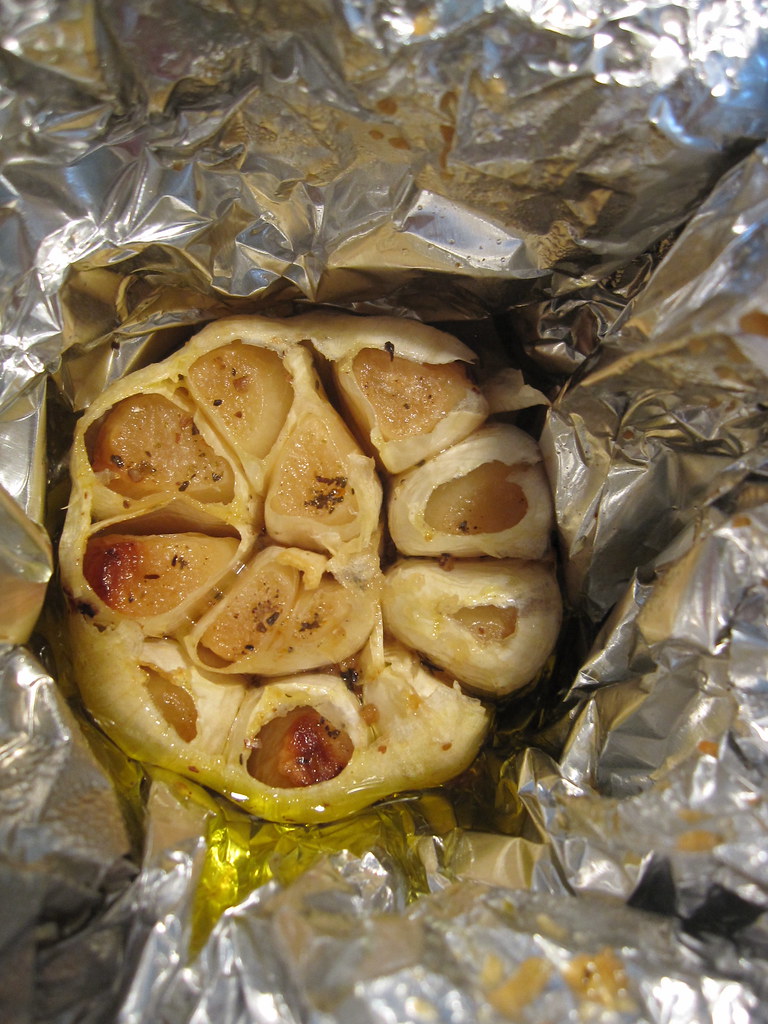
Garlic, how do i love thee? I love thee very much! I've heard friends recently say "that recipe calls for 4 cloves of garlic, and that's just too much!" NEVER! NEVER TOO MUCH! I may be sweating garlic from my pores and panting from the mouth, but there's never too much garlic for me!
According to nutritiondata.com:
This food is very low in Saturated Fat, Cholesterol and Sodium. It is also a good source of Calcium, Phosphorus and Selenium, and a very good source of Vitamin C, Vitamin B6 and Manganese.Caloriecount.com agrees and neither website can say ANYTHING bad about garlic at all:

 Like onions, i put garlic in just about everything i cook. It adds flavor, spice, and when roasted a real decadent creamy element. I usually put at least 3 cloves garlic in everything. Vitamin C, Calcium, and Iron are all things my body needs a lot of, especially since i don't eat a lot of citrus, dairy, or red meat. I planted as much garlic as i could fit into my gardens this year, but am still disatisfied with the yield. So far i've only been able to harvest the whips, or immature garlic that you eat more like a scallion. But their leaves are browning and the bulbs are finally expanding a bit, so i think in about a month or so i'll be harvesting and setting out to cure and then braid for storage. Store garlic in a cool, dry place: which doesn't exist in my house. But i use it up so fast, it generally doesn't have time to rot. You can't store garlic in the ground like onions, it will rot if you're not diligent.
These are last year's garlic braids. Hard necks don't like to be braided. This year's are much prettier. I'll have to take some photos soon.
Some garlic growing/cooking facts:
- Each green leaf you see above ground equals a 'paper' on the clove and eventually a bulb. Wait for the leaves to brown, but not completely or you risk rotting. Check below the soil a few times until you see a nice plump bulb, harvest one and assess the situation. you want the papers to be pretty developed to protect each clove.
- Garlic gets meaner with more abuse: if you put garlic cloves through a garlic press or bash to a smoosh with a knife, the garlic will be spicier. For milder tasting garlic, only tap the clove to remove the paper, then dice carefully.
- The greens are edible when the plant is young.
- The scapes and flowers of garlic are very tasty, almost like oniony broccoli. Saute and enjoy!


