Tuesday, May 31, 2011

Envirosax! Awesome Grocery Bags and a GIVEAWAY!

Omigosh, i am so excited about this giveaway! Envirosax has been nice enough to offer a free bag from their new Travel Series to one of my lucky readers. I've been an Envirosax use for years and truly want you, my readers to get a chance at these awesome bags. I think they are hands down the absolute BEST reusable grocery/everything bags on the market. See below for GIVEAWAY details!

The genuine Travel Pack by Envirosax celebrates the beauty and essence of three world-class cities. Featuring awe-inspiring New York, romantic Paris and scenic Sydney, these whimsical bags will make you feel like you are there.
“Whether you are exploring exotic places or discovering local hidden hideaways in your own hometown, these bags are designed for the adventurous at heart,” said founder and CEO Belinda David-Tooze.  
These bags will have you daydreaming about watching a play in the Sydney Opera House; enjoying a romantic dinner overlooking the Eiffel Tower or shopping in trendy SoHo in New York. 
The Travel pack can be purchased as a pouch or individually. These bags make great gifts for friends who have a special fondness or memories of these cities. I'm particularly fond of the Sydney bag as i spent a semester in college living in various parts of Australia.

I've been using Envirosax for many years since my best friend gifted me one while traveling in Denmark. I used my first Envirosax bag until it was literally falling apart at the seams, but that didn't happen for about 6 years! If you're like me, you constantly forget your reusable bags in the back of your car, in the house, or somewhere in the garage filled with picnic supplies from the last weekend's adventures, instead of bringing them INTO the grocery store with you. The bags from Envirosax are made specifically with us dodo birds in mind. They roll up so compactly, they can easily live in your purse and even fit in a pocket. Unlike some other fold-up reusable bags, Envirosax fold out to be HUGE with a 44 pound capacity (which i'm sure i have exceeded). I can usually fit my entire grocery trip in 1 bag and 2 always has me covered. I've had my current bag for about 3 years and it's showing zero signs of wear, other than being less waterproof (due to my mistake: you're not supposed to machine wash/dry Envirosax). They are washable, but hand washing is preferred to maintain that water resistant coating.

Envirosax are easy to use. They start out as cute little sushi sized rolls with snaps and fold out to be roomy, comfortable over the shoulder and ready to transport whatever precious cargo you have - they even stand up on their own if you pack them nicely.

Join Envirosax in its goal of encouraging reuse and reducing waste from one-use plastic bags.  Envirosax features graphic prints in a variety of shades to suit everyone’s lifestyle. I picked up my cute "Animal Planet" series bag at The Natural Gardener. I like birdies  :)
Use your Envirosax for:
  • Carry-on luggage
  • Laundry bag
  • Beach bag, perfect for wet towels and suits
  • Groceries
  • Other shopping
  • Carrying shoes
  • Sewing/knitting projects
  • Diaper bag
  • Anything, anywhere, anytime as you will always have it with you!
At about 20 pounds, Pocket barely strains the weight limit of my Envirosax bag. I doubt she'd enjoy riding in there, but doesn't she look adorable?
THIS GIVEAWAY IS NOW CLOSED!!!! THANKS SO MUCH TO ALL WHO ENTERED. WINNER TO BE ANNOUNCED SOON!

And now for the GIVEAWAY! As usual i'd like to offer a variety of chances for you to win, you'll get 3 shots this time 'round and i hope you'll use all three! These bags are really so super awesome, i wish i could get one for every one of my readers! But i can't, so i hope you'll enter for your chance to win. The contest begins TODAY and the winner will be chosen this coming Monday at 8 pm central!

1. Please check out their FAQ at Envirosax.com and comment back here with one of the facts you think is pretty awesome. (I'm pretty fascinated by their printing process which allows those pretty designs to last just about forever with minimal fading.)

2. Tweet/Facebook/Blog about Envirosax and/or An Austin Homestead and this giveaway, then post a comment with the link to yours for a second entry.

3. Become a new 'fan' or "like" An Austin Homestead on Facebook, become a new follower or subscribe to my feed, or refer a friend who does so and comment here with that info for a third entry.

For a secret bonus entry, submit a tip or trick you regularly use to minimize your waste while traveling or grocery shopping. I know some of you are forward thinking enough to bring mason jars and jar funnels to the store when going bulk shopping, i'd be interested in hearing any other tips on how to use less packaging, especially when traveling.

So that's that! FOUR chances to win a super awesome 'good for everything' and 'store anywhere' bag from Envirosax. For even better karma, click the new "stumble" icon below to spread news of this great giveaway to the world. Be sure and leave contact information with your comments so that i can congratulate the winner and get you your new bag. Good luck!

Monday, May 30, 2011

Mockingbird Monday

I've been out busy with my Yard Farm clients and some Memorial Day body step! But my husband had the day off and caught this delightful scene on our neighbors' roof in my absence:


Since we moved here almost 5 years ago, we've had a relationship of sorts with our local mockingbird (who is probably really several birds, who am i kidding). We named him "Thump" because of the way he'd plop down beside us while we gardened. He's always seemed curious of us and is an excellent hornworm sentinal in the gardens, only occasionally nipping at the tomatoes. He prefers bugs to veggies and is a great asset to the garden, but is also a friend.

Every year we watch as Thump courts his wife, gathers sticks for his nest, and finally brings his fledgelings into the world for us to meet. Invariably we hear the mature boy chicks singing lonesomely in the night, looking for their own mates, until they finally move onto their new territory. Thump and his wife are excellent parents, screaming at passing cats and bombing them with sharp little beaks. I do my part to help by throwing stones and making life cat unfriendly around my homestead. I give all our local plenty of water in the summer and try and feed seeds in the Winter when i can. I really enjoy this time of year, spotting fledgelings of all sorts. Our little pond in the backyard is a fantastic gathering place for all sorts of critters, and i've been noticing several puffy bluejay fledges trying their wings for their first baths.

We will miss Thump and all his mockingbird friends and family when we leave this area, plus the cardinals and pretty bluejays. I look forward to getting reacquainted with the northern birds, though.

Friday, May 27, 2011

Project Propagate: 1 Month

As some lovely readers have pointed out, this intensely hot "Spring" has not been the most ideal time to attempt to root cuttings. I feel that i've achieved a decent amount of success, however. Every tray is now showing substantial roots. They're still small, but they're catching on. Watering has been an issue. The edges of the flats dry out and the centers get too wet.... there have been casualties. All in all, my cement tray system has actually worked pretty well, and i'll try it again when i'm in less of an intensely hot environment.


My store bought starter kit is working alright as well, and i think i'll at least have a few plants to bring with me on my move north.
The salvias that were blooming all crashed. Further proof that it's best to work with cuttings that aren't blooming or even have too much foliage. You want the energy to be focused on rooting, not blooming or leafing out. One whole tray of rosemary appears to be cruising along with zero casualties... so that's a major success! The sage, not so happy - but there are a few living specimins so not a total loss.
All in all i think this project is coming along nicely. In another month these little guys should be ready to transplant to larger pots, but i'll be on my way to Oregon by then, so hopefully my "replacement" will keep you posted!
This post  was written for the rockin' local business/blog Yard Farm Austin. I hope you'll check them out!

Thursday, May 26, 2011

Micro Ecosystem

I love my little yard. Watching the thriving ecosystems at work brings me daily joy. I hope the next residents of this little house will get as much out of the bugs and lizards as i do, and will in turn give back to the little creatures to keep them around.

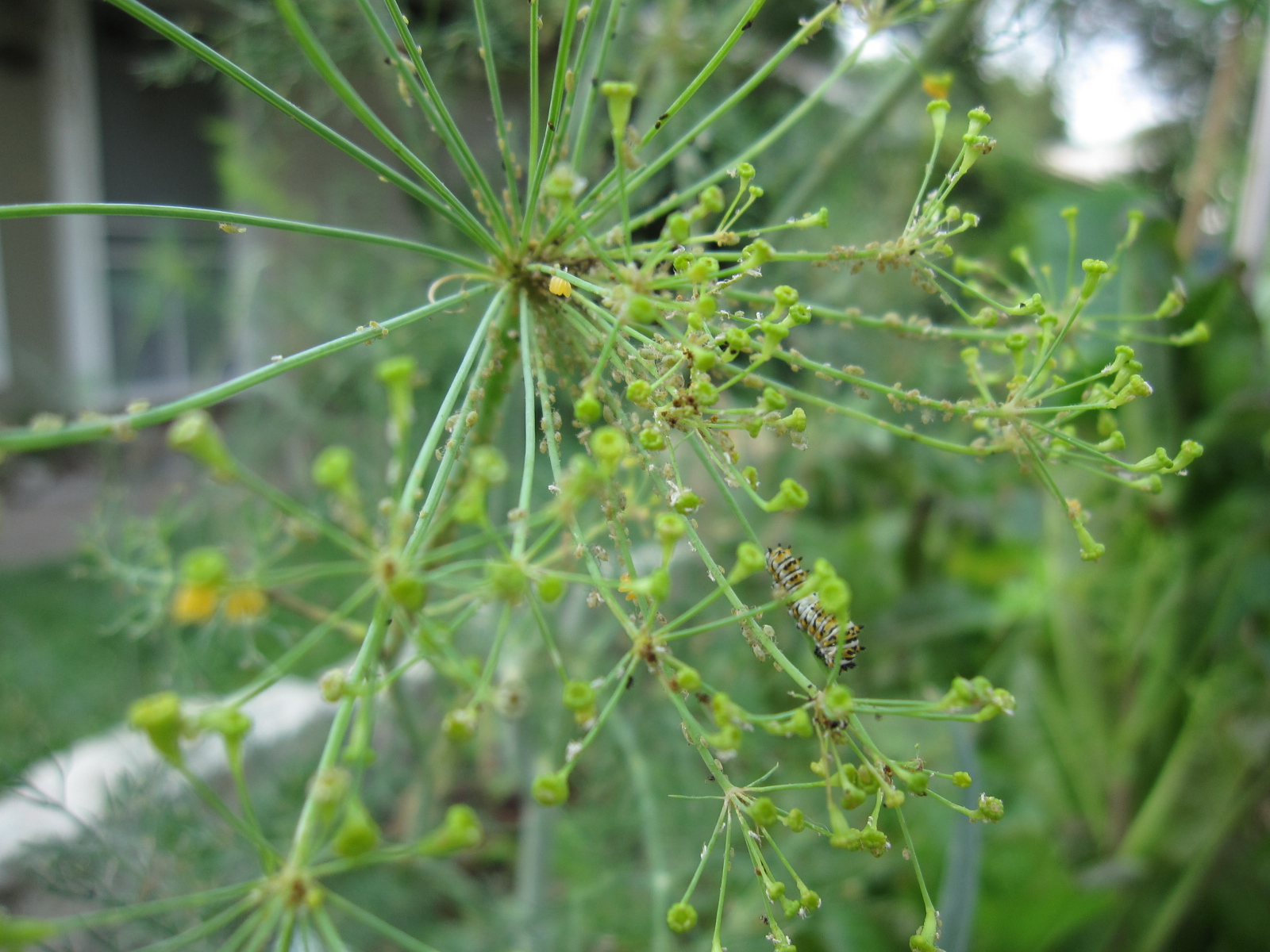
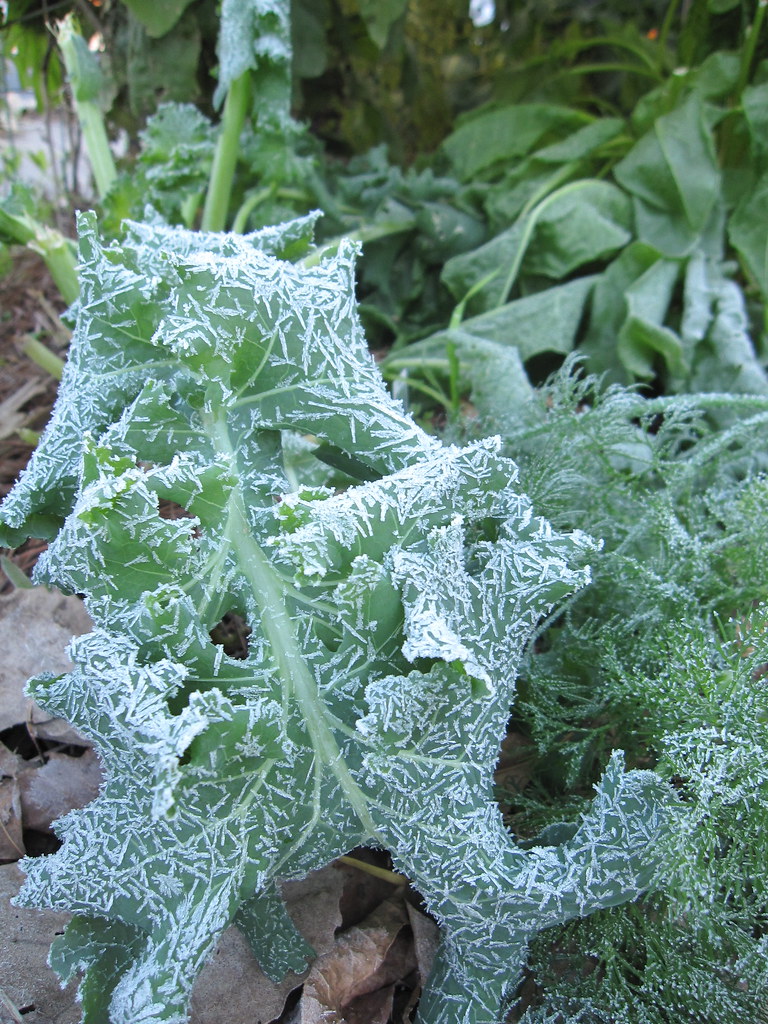
My early crop of dill was frozen this Spring, causing many swallowtail butterfly larva to starve or be easily picked off by birds. Pickings were slim. Thankfully, a new crop has come up tall and lush and the butterflies returned to lay another batch of eggs. On my way out to the car yesterday i took a few moments to pause and look at the tiny ecosystem flourishing in my front yard. It's amazing how much can be going on within the confines of one dill plant.

Top: Adult Ladybug (ladybeetle) Left: Ladybug eggs Right: Swallowtail butterfly caterpillar

The dill is coated with aphids. You might be tempted to squish or spray them, but i know there are ladybugs about that need feeding and that need a constant supply of aphids to keep them around. If i was to remove the aphids myself, the ladybugs would have to fly off to better feeding grounds. I want them around to protect my other plants, so i leave the aphids on the dill. I am rewarded:
Adult ladybugs, ladybug nymphs, mating ladybugs and ladybug eggs!


I also see some tiny swallowtail caterpillars in their 2nd or third instar. Still teeny tiny, but munching away. The dill won't last long once these guys get bigger. Thankfully there are more dill plants this season and they're flowering which gives even more protection from the mockingbirds.


Spiders can also be found in webs weaved amongst the flowers. Flies land on the flowers and get caught in the webs. Any help against flies is well appreciated by me!

It's amazing how transformed this once dead landscape is today. October 2007 saw a great change of hands of this little property. My hands may be leaving this homestead, but the ecosystem now thrives and should continue to do so as long as food, water, and natural gardening methods are provided. I'm looking forward to a little break from gardening while we transition to our new home, but i'm excited to get my hands dirty again in our forever homestead and make another ecosystem thrive around me.

Wednesday, May 25, 2011

Wholesome Wednesdays: Garlic

It's garlic time! This year's softnecks are braided and hanging in the kitchen, some hardnecks that weren't quite ready are bundled and drying despite being immature, and a few more hardnecks and elephant garlics are still out in the garden getting nice and big. It's a good time of year to repost last year's Wholesome Wednesdays: Garlic. Enjoy!


Garlic, how do i love thee? I love thee very much! I've heard friends recently say "that recipe calls for 4 cloves of garlic, and that's just too much!" NEVER! NEVER TOO MUCH! I may be sweating garlic from my pores and panting from the mouth, but there's never too much garlic for me!

According to nutritiondata.com:
This food is very low in Saturated Fat, Cholesterol and Sodium. It is also a good source of Calcium, Phosphorus and Selenium, and a very good source of Vitamin C, Vitamin B6 and Manganese.
Caloriecount.com agrees and neither website can say ANYTHING bad about garlic at all:


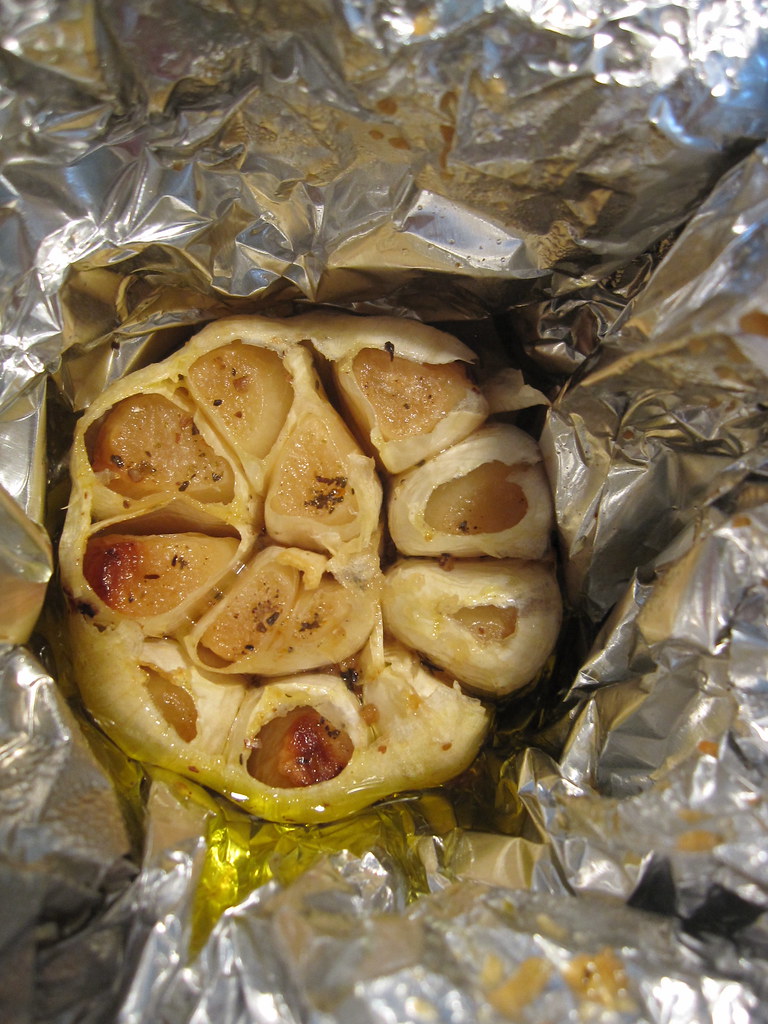
Like onions, i put garlic in just about everything i cook. It adds flavor, spice, and when roasted a real decadent creamy element. I usually put at least 3 cloves garlic in everything. Vitamin C, Calcium, and Iron are all things my body needs a lot of, especially since i don't eat a lot of citrus, dairy, or red meat. I planted as much garlic as i could fit into my gardens this year, but am still disatisfied with the yield. So far i've only been able to harvest the whips, or immature garlic that you eat more like a scallion. But their leaves are browning and the bulbs are finally expanding a bit, so i think in about a month or so i'll be harvesting and setting out to cure and then braid for storage. Store garlic in a cool, dry place: which doesn't exist in my house. But i use it up so fast, it generally doesn't have time to rot. You can't store garlic in the ground like onions, it will rot if you're not diligent.
These are last year's garlic braids. Hard necks don't like to be braided. This year's are much prettier. I'll have to take some photos soon.

Some garlic growing/cooking facts:
  • Each green leaf you see above ground equals a 'paper' on the clove and eventually a bulb. Wait for the leaves to brown, but not completely or you risk rotting. Check below the soil a few times until you see a nice plump bulb, harvest one and assess the situation. you want the papers to be pretty developed to protect each clove.
  • Garlic gets meaner with more abuse: if you put garlic cloves through a garlic press or bash to a smoosh with a knife, the garlic will be spicier. For milder tasting garlic, only tap the clove to remove the paper, then dice carefully.
  • The greens are edible when the plant is young.
  • The scapes and flowers of garlic are very tasty, almost like oniony broccoli. Saute and enjoy!

Tuesday, May 24, 2011

A Tired Corgi

Is a happy corgi.


Gotta love spending a Sunday at the river: playing in the sand and swimming til you're half dead. Especially when you're covered in fur.

Monday, May 23, 2011

The Plan is Laid.

It's happening: we're moving! Closing is June 15th and we'll be signing the documents with a big ole' moving van in the parking lot. The next months will be a time of transition for this here blog, the first changes will be apparent by later this week, if i can get to them in between box hunting and packing. The week of our move will either be silent or serve as a travel diary across I-10 and up past Pheonix and Reno. Once we're quasi settled I will be focusing my content toward the differences in climate, new challenges with Pocket in strange surroundings and more 'fun stuff' such as backpacking routes and camping destinations.

still straight - love this valley, want to move here (n nevada)
The road ahead of us: Northern Nevada.

My husband and i will be fervently hunting for jobs in the Willamette valley while living down south, so we'll be traveling quite a bit- for work and for pleasure, and i plan on documenting many of our trips to write up reviews on our destinations. Who says a food/gardening blogger can't become a travel writer? I think it will be great! When finally we find our forever home/farm, this blog will renew in earnest with a new name and the same mission in a more rural setting. Less an urban homestead, i hope to find a proper homestead with plenty of acres to spread out and really get to all the projects on our docket from expanded gardens, to assorted livestock, to orchards and hard cider. I'm getting very excited for all the changes, and i hope you'll follow our adventure north.

In the meantime, i have more garlic to braid, cuttings to tend to and whole ingredients needing to be utilized before i pack up the kitchen. This Austin homestead is filling up with boxes, but the kitchen gear and garden tools will be the last to go into one.

Friday, May 20, 2011

Wholesome Wednesdays: Frozen Vegetables

When it comes down to it, we hope to have harvests that yield many more veggies than we could possibly eat in season. It's nice to have extra produce to give to friends or sell at market, and even more important to put some of your yield by to feed you in the off seasons. There are several options for storing your produce for the next season, and they're not all created equal or all suited for every crop.

  • Canning
  • Deydrating
  • Freezing
  • Root Cellaring
  • Brining
  • Fermenting


These are some of the methods you can use to extend the life of your freshly picked harvest, and most are best employed as soon after picking as possible so plan ahead. One of my best resources for learning preservation methods and honing my recipes is a great little book Putting Food By, by Janet Greene, Ruth Hertberg and Beatrice Vaughan. I have the 4th edition full of some interesting 'modern convenience' minded recipes. Apparently there's a 5th edition! I might have to get my hands on that. The book has specific recipes to broad techniques and suggestions on what preservation method is best for each crop. I'll be using this book as a reference for the information below.


Not all freezers were created equal, and not all crops were created well suited for freezing. I think we're all too familiar with slimy okra and summer squash, rubbery carrots, or frost bitten crystally freezer burn. Eventually, we'll be investing in a chest freezer, large enough to accomadate large harvests of animal meat as well as vegetable crops. Chest freezers maintain their even temp more easily and need to be defrosted less often. For now, i'm stuck with a tiny side by side that makes me want to cry. Certain varieties of crops are also better at being frozen than others. Green beans make good frozen veggies, but check with the seed company or package to be sure the variety of bean you're growing is good for the freezer.


Preparing tomatoes for sun drying in my hatchback car.


How does freezing extend storage life and when is it the better option than canning? Freezing does not kill bacteria and other nasties that can cause soilage like canning does. Freeze things fast and keep them frozen: as soon as they reach temps warmer than zero the bacteria will begin to dance about and multiply again. That lack of killing temperatures is actually what makes freezing ideal for some crops. More nutrients are preserved in frozen vegetables than some canned vegetables, depending on the processing time in the canner. It is ideal to flash freeze your items to be stored first at negative 20, then suspend at zero degrees. You can store most foods for up to a year, but freezers cost money and keeping things frozen for much longer than a season or two isn't very economical.


Ready to freeze? Just like canning, freeze only the best and fittest veggies - usually young specimens. For most vegetables it is necessary to blanch them first, but i have great success with hot peppers by popping them right in the freezer after only cutting the stem end off. For the rest, wash the vegetables well and blanch by either dropping in boiling water for the amount of time specified in a good preservation guidebook (like the one i'm reading now, or a reputable online site), in steam, or in a microwave. Blanch in large kettles with plenty of room for the veggies to toss about and drop into cold water as soon as you remove them from the blanching kettle. Stop the cooking fast, package, suck out the air, label and freeze. Voila! It's important to label your frozen goods well, and employ the 'first in, first out' technique when choosing your frozen veggie packs from the freezer.  Similar methods are employed for meat: harvest your meat, clean and package in well sealed packaging, label and freeze fast.

This isn't quite what i had in mind...


My favorite frozen vegetables are peas, green beans and corn. I love to sprinkle frozen peas and corn on my salads and frozen green beans are a great last minute addition to many of the weeknight meals i like to prepare. My favorite canned vegetable so far is tomato: takes up less freezer space when canned and is easy to can, requiring only a water bath process. I like to ferment or freeze hot peppers and dehydrate apple or pear slices.


What is your favorite preservation method? What vegetable do you like best for freezing?

This post can be found at the Simple Lives Thursday blog hop.

Thursday, May 19, 2011

Curing Onions

I wrote about the health benefits of onions yesterday, and will be discussing how to harvest and store your lovely globes of nutrition today.  I must preface this by declaring myself a 'non expert' when it comes to storing vegetables long term. I have a small garden and a large appetite: i tend to cook and eat our harvests pretty quickly. The frozen and canned goods last us through to the next season, but root cellaring is not something we practice and most of our onions and garlic get consumed rapidly. One day (soon, i hope) however, I will have a big garden with vast beds of onions and garlic which will both need to be cured and properly stored if they'll keep feeding us past their season. Hopefully i'll have a nice shed (or two or three) to do the curing in and maybe even a crawlspace or cold storage area for long term storage. For now, this is how i do it.


I planted this year's onions several times starting in September with the last planting in January. I plant 2 inches apart and harvest as 'green onions' to small bulbs throughout the season making way for the onions left in the ground to swell to their full capacity, at about 4 to 6 inches spacing. I've had great results this year and have harvest some big daddies that i'm very proud of. You can tell that the onions are mature and ready to harvest as storable bulbs when the greens fall over and begin to whither. Until this point, you can be harvesting and eating the greens as well, my favorite part! When the onions are ready you can pull them up or leave them in the ground. This drought made all mine pop up out of the soil, and impending rain storms cause me to want them out of the soon to be soggy garden, so i'll eventually harvest most of mine. I'm being choosy right now and leaving some in the ground to get a little bigger, harvesting as needed for dinner, and pulling some for storage. In other climates you can leave your onions in the ground for storage for a decent amount of time... but eventually that ground needs to make way for the next crop, so best learn to store those suckers efficiently.


Once the greens have dropped and you've decided to pull the onions, do so carefully. Try not to rip the shrivelling greens from the top of the bulb. Lay out the onions in a shady, well vented, dry place like a shed, barn, or garage. I've been using my carport but it's so darned humid that the greens were getting moldy. I've since moved them to my soap curing racks. Doesn't smell QUITE the same as fresh soap...
Once the onions have dried up sufficiently it's time to store them. As i said: i'm no expert. I would ASSUME that you can tell the onions are dried enough by cutting the greens and assessing the amount of juice that wells, the same as you would garlic. That being said, stored onions are still rather juicy, so you may be able to store with some juice still apparent when cutting the greens.  You can store your onions in a burlap sac, in cold storage or use an old onion sack from the store. Plenty of onions have been lost to mold in those sacks, so i'll be employing the 'panty hose' method. Take each onion and drop it into panty hose, dividing with a knot. As you need an onion, simply cut one off and the rest stay secured in the panty hose. The mesh of the hosiery gives the onions plenty of ventilation and also keeps them from laying against each other and rotting.


I'll post pictures once i get my onions stored. I'd love to hear how you process your onion harvests.

Do you have large yields of onions that get stored? What method do you use and where do you cure the onions?

This post is part of the Simple Lives Thursday blog hop and Homestead Revival Barn Hop. Please check them out! Tons of homesteading, frugal living, real food cooking tips from great bloggers abound!

Wednesday, May 18, 2011

Wholesome Wednesdays: Onions

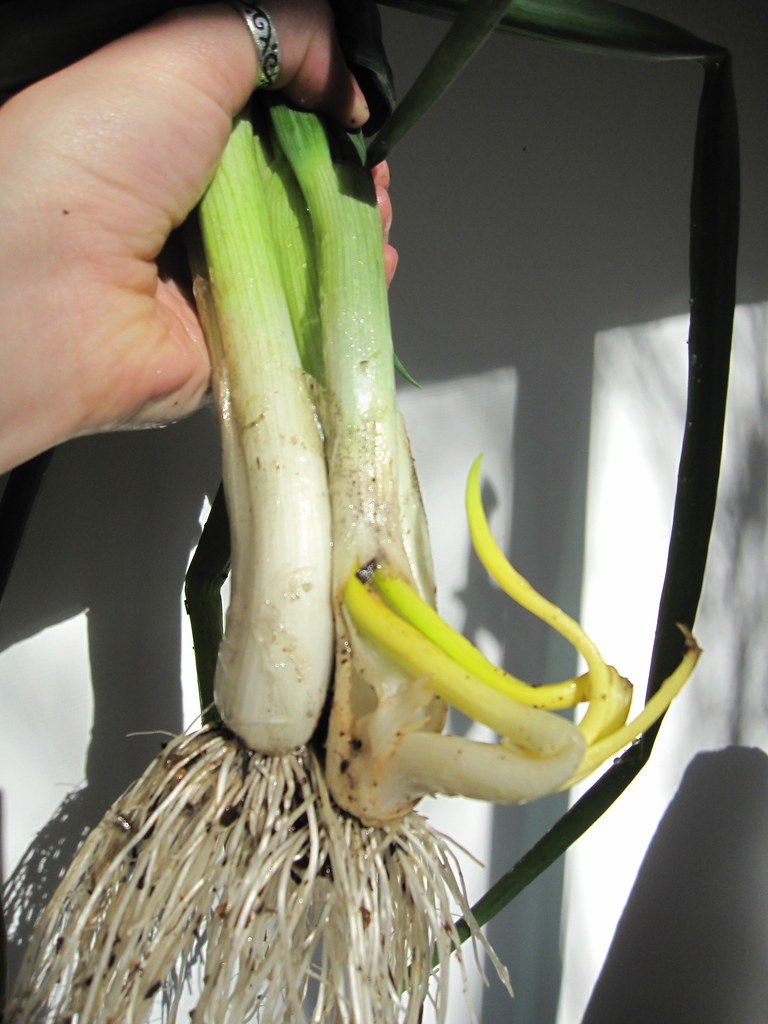
This time last year was getting to be an oniony time of year here at the homestead. I planted a bit later last year and had to prematurely pull out some spring onions in early May to make way for late planted basil seeds. You can see the greens are still in tact which means the bulbs could have gotten bigger if i'd left them in the ground. I love eating the greens too, so none was wasted.


This year i planted much earlier, in both September and again in January so i've been harvesting onions for several months. The greens have finally all fallen over and i've pulled some from certain beds and am leaving others to store in the ground. I was concerned our recent big rain might rot the ones left in the ground, but it's been hot and dry enough to keep them happily preserved.

Picked and curing in as shady and well ventilated an area as i could jerry rig.

You can harvest onions at any point you choose. I have both multiplying onions and bulbing onions in my gardens. The multiplying onions are presently drying up after their Spring bloom, working on hardening their little bulbs that can be divided and transplanted in the fall. In Winter and Spring, the greens can be harvested like chives. The bulbing onions were planted from sets. I chose a red and white variety, both are sweet. I can't remember their varieties, but i really like them. I've gotten some very large specimens this year and am quite pleased. I plant my onion sets 2 inches apart and periodially harvest every other onion to facilitate good, big round bulbs. After these onions cure, i'll slip them into some panty hose separated by knots. But honestly: i use onions in everything i cook, so storage will really only be an issue when i have a garden large enough to plant a whole FIELD of onions, plus a crawl space in which to put said stored onions. For now i mostly eat them up pretty quickly.


Nutrition: i always tell my friends when they're feeling a little less than perky: "Saute up a big batch of garlic and onions! That will knock out your cold before it gets you! "   They more often than not look at my with an expression of disdain. Well i know what's good for ME and haven't had a cold in over 5 years, thank you very much. Here's the breakdown:

Both Calorie Count and Nutrition Data give about the same results: Onions rock, they're high in vitamins and minerals essential for a healthy immune system, chock full of vitamin C to stave off the nasty germ monsters, but are high in sugar. Ain't it always so? The yummiest veggies sometimes have more sugar than you may have thought of.
I like to use that to my advantage: by adding sliced or diced onions to my healthy sautees, i can skip much of the oil and seasonings otherwise necessary. Their bodies contain a lot of liquid, so all you have to do is toss the onions in with the rest of your saute, add maybe a splash of stock, water, vinegar or wine, cover with a lid and let the onions do their magic.

Here's one last food for thought for you to mull over, courtesy of www.aggie-horticulture.tamu.edu:
Onions are high in energy and water content. They are low in calories, and have a generous amount of B6, B1, and Folic acid.
Onions contain chemicals which help fight the free radicals in our bodies. Free radicals cause disease and destruction to cells which are linked to at least 60 diseases.
To make onions milder, soak them in milk or pour boiling water over slices and let stand. Rinse with cold water.
When a person eats at least 1/2 a raw onion a day, their good type HDL cholesterol goes up an average of 30%. Onions increase circulation, lower blood pressure, and prevent blood clotting.

And one last tip, you ask? To prevent tearing up when cutting your onions: Breath in through the mouth, out through the nose. Those tears are actually coming from irritation in your SINUSES not your EYES. Also, start cutting at the top of the onion, leaving the root for last or not at all: most of the irritating juices come from the root end.

Here's to your health!

Tuesday, May 17, 2011

Summer Salads: Greens That Take the Heat

Despite this cool morning in Austin, it has been hot outside. Really, really unseasonably hot. Even without these unusually high temps and overly dry forecasts, it's about time for us to let go of the idea of fresh salad from the garden. Or is it???

Butter lettuce, mesclun, romain and the other 'cool season' salad greens are on their way out. I have several beautifully flowering (bolted) plants left in my garden to go to seed to save for next year and a small patch of 'Farmers Market Mix' is still almost edible. For the most part, however the salad greens are bitter and no longer tasty. Don't lose hope, there are salad greens for Summer!


In Central Texas we don't usually get to enjoy crisp garden salads in the hot Summer heat because the plants bolt to go to seed. This makes them bitter and not tasty. There are a few varieties of greens that can be used for salads all throughout the Summer, however. We've put some of these work horses in several of our clients' gardens and can't wait to see them explode with production. Malabar Spinach and New Zealand spinach are both heat tolerant greens that will climb or sprawl about and look as beautiful as they are tasty. The baby leaves can be eaten in fresh salads and the larger leaves and stems can be sauteed up.

Malabar comes in green or red stem and if allowed to flower, the red stem puts on magenta berries that are great for crushing up and war painting your white pets, or your own skin. I recommend clipping off the ends of the stems instead of trying to pick off individual leaves which takes FOREVER. This also encourages the long as heck vine to branch out and become a bit bushier and thus easier to manage. Plant Malabar Spinach somewhere where you have lots of room or want some pretty color. I recommend along a fence or up a wall trellis. Malabar Spinach will reseed easily, so plan on allowing it to replant itself year after year, or pull or transplant the volunteer baby spinaches next season to move them to a new location. This is a cute post by another sustainable living advocate about his adventure planting Malabar Spinach for the first time: Growing Groceries.


New Zealand Spinach does not climb, but it forms long, sprawly stalks that can fill a garden space attractively without getting as long or out of control as Malabar. One or two plants are all a family really needs, but spinach can be blanched and frozen, so why not grow the bejeebers out of it?

Fresh Summer salad greens may be limited in the heat, but it's nice to know we Texans have some options to facilitate the long awaited BLT or spinach/strawberry/feta salad.

Have you grown either of these Summer greens? How do you like them?

Monday, May 16, 2011

Thrips: Tiny Pest, Big Impact

Walking through the lawn and feel a sharp bite on your arm only to look down and see nothing? Look a little closer: that tiny beige freckle is moving! Thrips are itty, bitty winged insects that will feed on most any plant, and are happy to take a taste of you from time to time. They are easily controlled with a good balance of predatory insects like lacewings, but can kill vegetation if allowed to populate out of control. According to the Texas Organic Vegetable Gardening book (a must own for all Texas veggie gardeners) thrips
attack buds and tight-petaled flowers such as roses. They are barely visable to the naked eye but will rasp the plant tissue and drain teh sap. Heavy infestations can kill plants... Controls include seaweed, lacewings, citrus and neem.
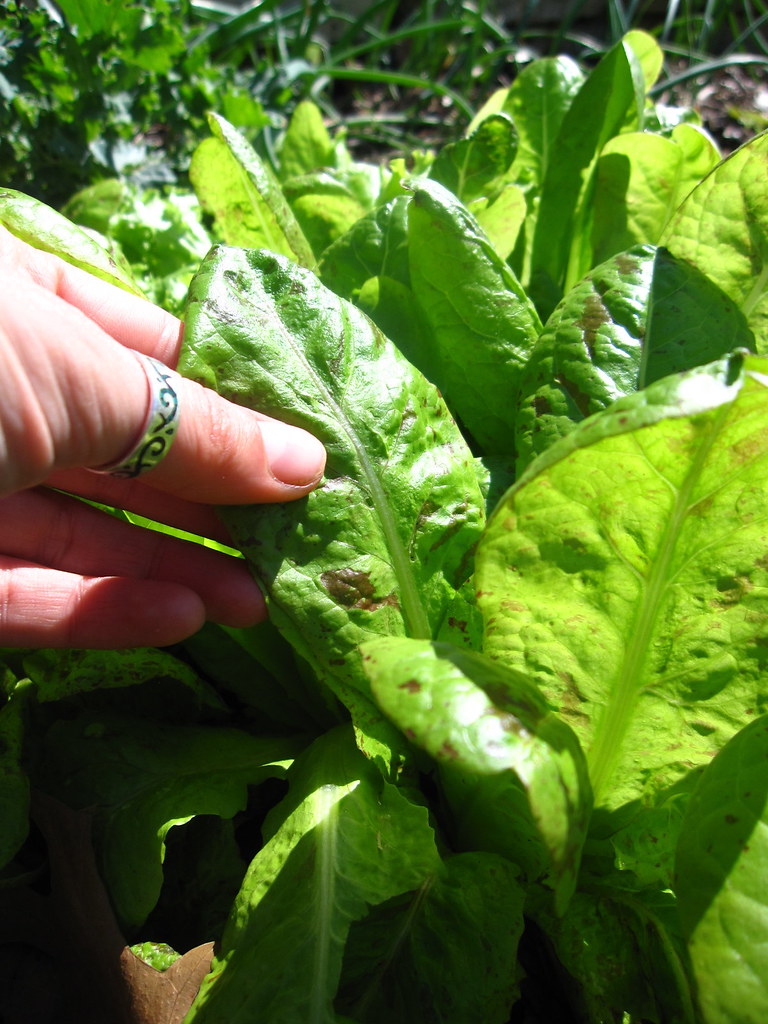
How do you determine thrip damage? The sap suckers will leave leaves with a mottled appearance and can deform leaves and flowers. You may see runner lines on the underside of the leaves and sotty debris from their droppings. My early tomatoes had trouble setting their flowers last year: thrips were to blame. Thrips can also cause problems by spreading disease from plant to plant. If you notice a spread of wilt throughout your garden, you may have thrips to blame. This image shows thrip damage on cucumber plants:


I think i may have just determined what's plaguing this year's cucumber crop in my own garden. Here's my cucumber:


Looks pretty similar, ay? I had some weeeiiiird disease looking deformation in my cucumbers the year before last: twisted up flowers and mangled leaves. I'm thinking thrips may have been to blame then as well. I did spot some small leafhoppers on the leaves, so this damage may be due to them or a combination of the two pests. Thrips are more likely to descend effectively on your crops when they're suffering from dryness. Another reason that automated irrigation, preferable at the soil level is so important to the health of your garden. Thrips are also attracted to pink and blue, making them common pests for flowers like petunias. You can control or at least ID your problem as thrips by placing bright blue or pink cards sprayed with sticky trap at intervals in your garden. Another useful control for thrips is allowing dry, weedy areas to remain outside of your garden. The thrips like the dry, unhealthy grassy weeds (another reason you'll feel the stingy thrip bites while walking through droughty lawns) and will leave your vegetables alone.

Our massive drought is definitely taking a toll on my (unautomated) garden. Plants are stunted due to lack of consistent water, and pests are staking their claims. The natural predators usually found in force in my garden (toads, anoles and predatory insects) have been hiding from the heat themselves  and aren't doing their jobs as well as i normally expect them to! To be honest, i've just about had it with this season. I'm so happy to see some of our clients' gorgeous gardens on a weekly basis. Despite the drought, their gardens (with automated watering) are really popping and utilizing this heat and sun to set early harvests. For the rest of us struggling through the heat - it's time to start seeds for Fall. Let's hope that season does us a little more kindly.

Some very excellent photos of various species of thrips and their damage can be found on this site. Perusing this page makes me realize I have a lot more thrip damage on a lot more plants than I ever thought. Onions, citrus, cucurbits and beans all show signs of thrip damage in my garden. Dang!

Articles with useful information on thrips:
This post can also be found at Yard Farm Austin.

    Friday, May 13, 2011

    Homemade Ravioli, and Final Review for Dave's Gourmet

    The final pasta sauce i've been lucky to try from Dave's Gourmet is the Butternut Squash Pasta Sauce. I don't think i can choose a favorite between this sauce, the Organic Red Heirloom or the Masala Marinara they are all so good and unique! I paired the butternut squash sauce with some homemade ravioli filled with mushrooms and ricotta. So. Good.


    Making homemade ravioli does take some time, but it's so rewarding and delicious. The method is easy, just a bit time consuming and much quicker with an extra set of helping hands. I filled the ravioli with chard, onions and fresh herbs from the garden, finely diced mushrooms, garlic and some white wine. Simmer this mix until most the liquid is evaporated and mix with ricotta and season as needed. For the pasta, i mixed 4 or 5 eggs with about 3 cups flour, 1 tsp salt and 1 tsp olive oil. Mix until well integrated (it can be tough to knead!), divide into 4 or so chunks and let rest for 30 minutes (while you cook the filling). Once the dough has rested it will be easier to roll. I have a pasta maker which really makes the rolling easier. The key is to roll the pasta through about 4 times each chunk at the widest setting before beginning to decrease the thickness. Keep the pasta from drying out by laying out on a very lightly dampened towel and working quickly. The pasta rests sufficiently in the time it takes to get from the first strip to the last and back again. Once you have several uniformish strips, cut with a pizza cutter and form raviolis thusly:


    Lay the raviolis on a floury surface and be sure they don't stick together by sprinkling a bit of flour on the table when you're shaping them. Use a bit of water on the inside to help the pasta stick to itself and be sure to press both sides of the pasta with the fork. When you're ready for dinner bring a bit pot of water to a boil with salt and toss those raviolis in. Let the water come back to a boil and serve. It will take some time and the raviolis will want to leap from the pot.


    I invited one of my best friends and her man friend over to join in on the feast and they brought along a lovely salad with things from their garden. It was a truly delicious meal and seemed to be enjoyed by all parties. The butternut squash sauce is really interesting tasting. It's sweeter than tomato only sauce, but also tomatoey and tangy with hints of spices i couldn't peg my finger on. I highly recommend the sauce, and recommend making ravioli with friends - it's so fun to make a meal from scratch and share it with loved ones. Sharing really makes the time and effort much more rewarding.


    What's your favorite meal to make with/for friends?